ALGERIA SPLENDORS
Practical companion to our Casbah guide, our visa guide and our money guide. Prices and schedules in Algiers move faster than any guide; where a figure would rot, this guide teaches the mechanism instead — that is deliberate, and it is the Algerian way of travelling well.
Arrival: Houari Boumediene airport
Algiers' international airport (Houari Boumediene) is about 20 km by road from the city centre — 17 km as the crow flies — and stands east of the centre at Dar El Beïda; allow from 30 minutes to over an hour depending on traffic. The arrival sequence is the standard one — passport control, baggage, customs — with one Algerian signature: the currency declaration. Algeria controls its dinars; the money guide points to the official Customs declaration page and sets out the official-versus-parallel reality in full. Read it before you fly, not in the queue: what you declare, and the receipts you keep, shape your whole stay and your exit.
Getting into the city, you have four real options. Taxi — the default: official taxis wait outside the terminals; agree the fare before the doors close, in dinars, and expect the trip to take anywhere from half an hour to well over an hour depending on the ring road's mood. Hotel or riad pickup — the calmest first hour in Algeria; many mid-range and top hotels will send a driver with your name on a card, and after a long flight it is worth more than it costs. The airport train — a suburban rail link connects the airport to the city's stations (Agha, in the centre, among them) for a fraction of a taxi fare; it is the local's option, and with light luggage and daylight it is a good one. Bus — the cheapest and the slowest, for travellers who have already arrived once. What there is not: a metro station at the airport, or ride-hailing that works the way it does elsewhere — apps exist in Algiers (Yassir is the home-grown name), but the new arrival's reliable instruments remain the taxi rank, the train, and the driver your hotel sends.
Moving around a city in tiers
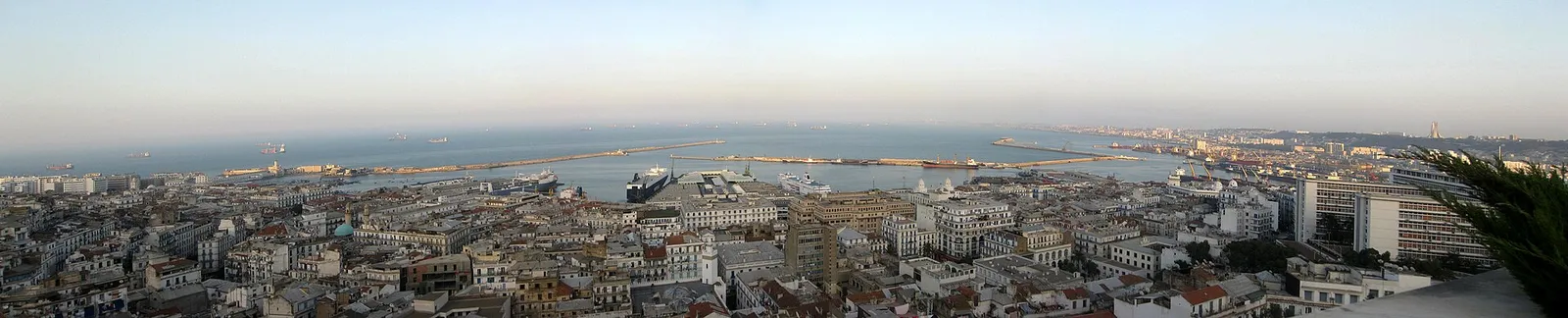
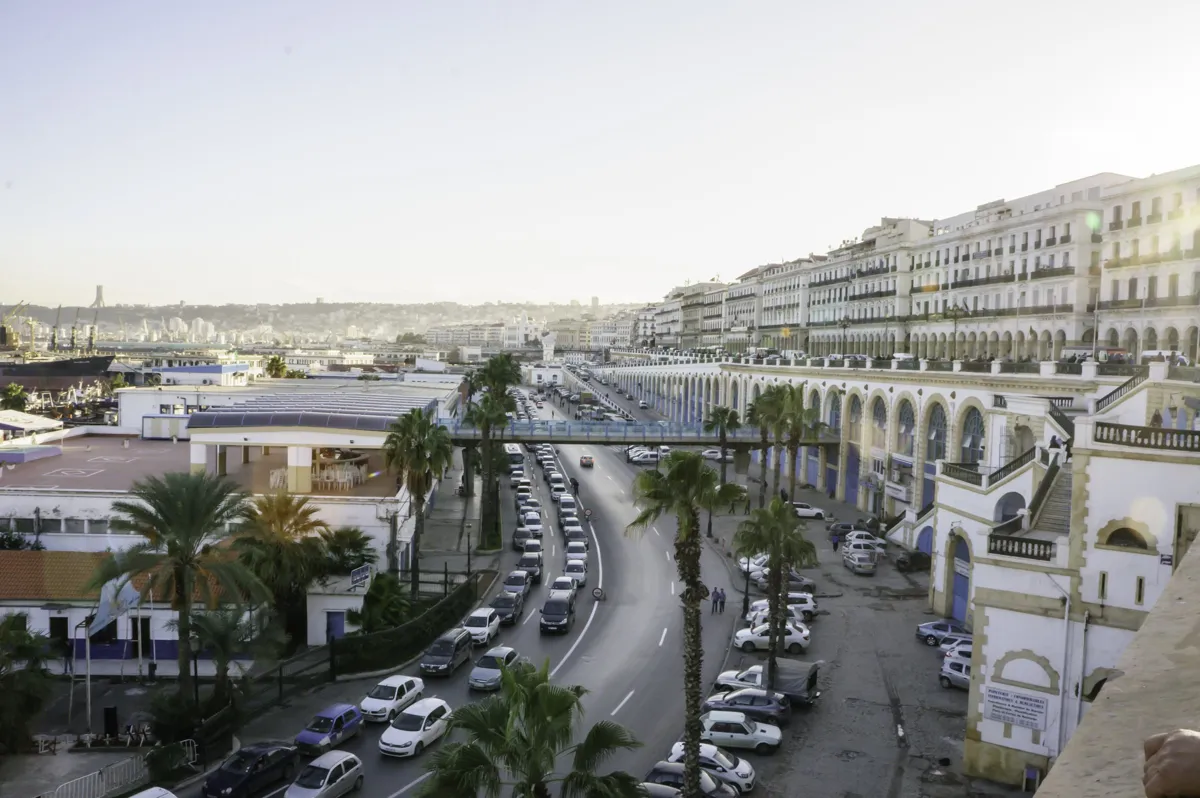
Algiers is a slope. The bay and the port at the bottom, the colonial boulevards above them, the residential hills — Hydra, El Biar, Ben Aknoun — above those, and the Casbah folded into the western shoulder. Every transport choice in the city is a negotiation with that slope.
The metro is the spine: a single line (with extensions built in stages) running from the eastern suburbs through the centre — Grande Poste, the Martyrs' Square — to the west. It is modern, cheap, air-conditioned, and the fastest way across the city's grain at rush hour. If your day crosses the centre, the metro is how the city itself does it.
The tramway serves the eastern districts along the bay — useful for the exhibition grounds, the botanical garden's side of town, and the run toward the airport corridor's neighbourhoods.
Taxis are everywhere and are the real network: hail, state the district, agree the price (or insist on the meter where fitted), and go. Fares are low by European standards; the negotiation is brief and good-humoured when you know your destination's name — learn the district names, they are the city's true addresses.
On foot is how the centre rewards you: the boulevards from the Grande Poste to the university, the stairs and ramps between tiers, Didouche Mourad's shopping crowds, the seafront squares. Walk the centre in the morning, the Casbah with our guide and a local, and the corniche at day's end.
Where to sleep: the districts, honestly
The centre (Alger Centre / Grande Poste). The practical heart: colonial-era hotels and modern chains around the port and the boulevards, the metro at your feet, the Casbah a walk west. For a first trip built on the city itself, this is the base.
Hydra and the hills. The embassy quarter and its neighbours: quieter, greener, more residential, with boutique addresses and the city's diplomatic restaurants — and a taxi ride down to everything. Choose it for calm and for longer stays.
The west (Sidi Fredj, Zéralda) and the east (the bay resorts). The seaside stations are Algiers' weekend self: beach hotels and family resorts 30–45 minutes out. Right for a stay that mixes the city with the sea; wrong for a first 48 hours built on the Casbah and the museums.
A word on booking: international platforms list only part of Algiers' real supply. Many good Algerian hotels book direct, by phone or through local agencies, and payment on arrival in cash is common — another reason the money guide comes first.
The first-48-hours kit
Cash. Algeria runs on dinars in hand; foreign cards work in few places. Change money through the channels the money guide describes, keep small notes for taxis, and treat card payment as a bonus, never a plan.
A local SIM. The airport and every phone shop sell Algerian SIMs (Mobilis, Djezzy, Ooredoo) with generous data for very little; your passport is the paperwork. Ten minutes buys you maps, translation and the city's real directory: other people's recommendations.
Friday. The Algerian weekend is Friday–Saturday. Friday morning is the city's quietest hour — administrations and many shops closed, the mosques full, families out by afternoon. Plan the Casbah for another morning; plan Friday for the bay, the gardens, and lunch.
The rhythm. Algerians eat late, stroll later, and the city's beauty hour is the long evening light over the bay. Adjust once, and Algiers stops feeling early and starts feeling generous.
Then, the city itself
With the logistics dissolved, Algiers gives up its real itinerary: the Casbah, a living medina of palaces, mosques and hundreds of historic houses above the port; the museums of the centre (the Bardo's prehistory and ethnography, the fine arts museum above the botanical garden); the Martyrs' Memorial on its hill, visible from everywhere; Notre-Dame d'Afrique on the western heights, reached for the view as much as the basilica; the Jardin d'Essai, the great botanical garden of 1832. None of it needs more than the skills of your first 48 hours — metro, taxi, cash, patience — and all of it repays the traveller who learned the city's logic before asking for its treasures.
Frequently asked questions
How do I get from Algiers airport to the centre? By official taxi from the rank (agree the fare first), by a hotel-sent driver, or by the airport train to the central stations. The run is about 20 kilometres by road and takes from 30 minutes to over an hour depending on traffic.
Is there a metro in Algiers? Yes — a modern single line (being extended in stages) crossing the centre from the eastern suburbs to the west, plus a tramway serving the eastern bay districts. Together with taxis, they cover a visitor's Algiers.
Where should a first-time visitor stay? In the centre around the Grande Poste for the city itself — metro, boulevards, the Casbah on foot. Hydra for quiet and longer stays; the coastal stations only if the sea is half the trip.
Can I pay by card in Algiers? Rarely. Algiers runs on cash dinars; read the money guide before flying, declare as required, and keep small notes for taxis and cafés.
What day is the weekend in Algeria? Friday and Saturday. Friday morning is quiet — administrations and many shops closed — and the city's life resumes in the afternoon.
Algeria Splendors writes from Algeria. Companion reading: The Casbah of Algiers: A Living City · Algeria Visa Guide · Money in Algeria