ALGERIA SPLENDORS
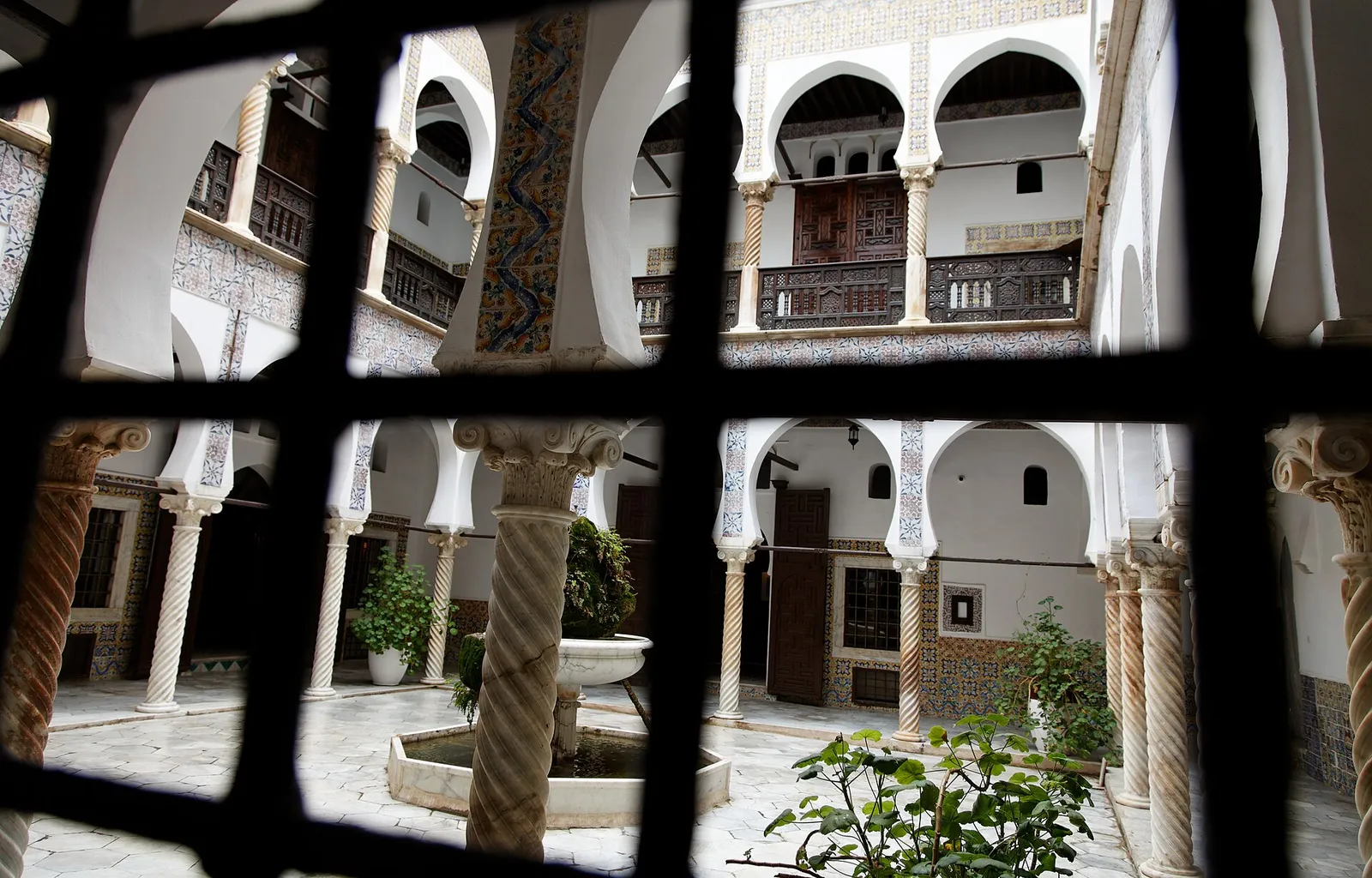
The Casbah of Algiers — inscribed by UNESCO in 1992 as the Kasbah of Algiers — is a historic medina on the hill above the bay, recognised as a unique kind of medina: the remnants of the citadel that gave it its name, old mosques, Ottoman-style palaces, and a traditional urban structure strongly associated with a deep-rooted sense of community. Read that description slowly and you notice something unusual. The listing does not separate the buildings from the social fabric that holds them together. The community is not context. It is part of what was recognised.
And the place is inhabited. People live, work, trade and worship in the Casbah today; it is a residential quarter of Algiers, not an open-air museum with a ticket booth at the bottom of the hill. So the useful question is not "what is there to see?" but something harder: how does a city like this keep being itself while being lived in — and what do we, looking at it from outside or from below, owe to the people who answer that question every day?
The site and the city
Start with the ground. Why here, and why this shape?
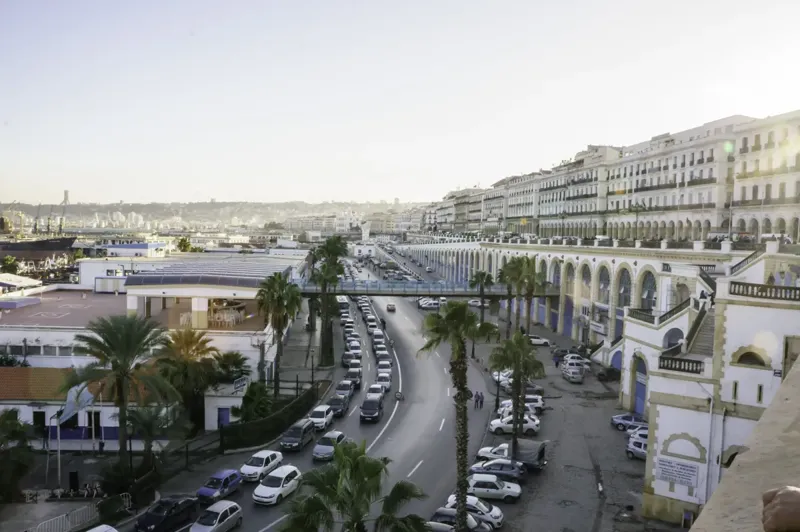
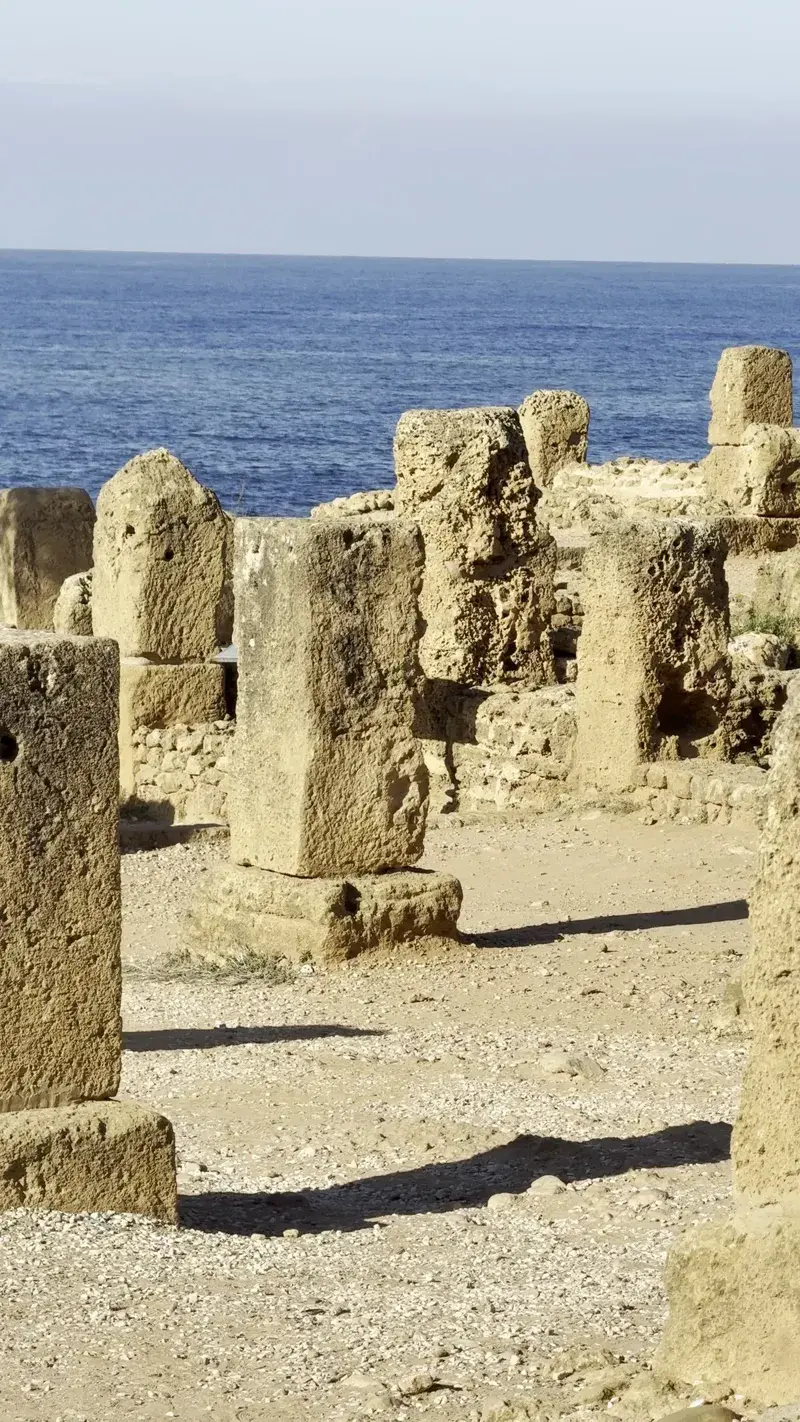
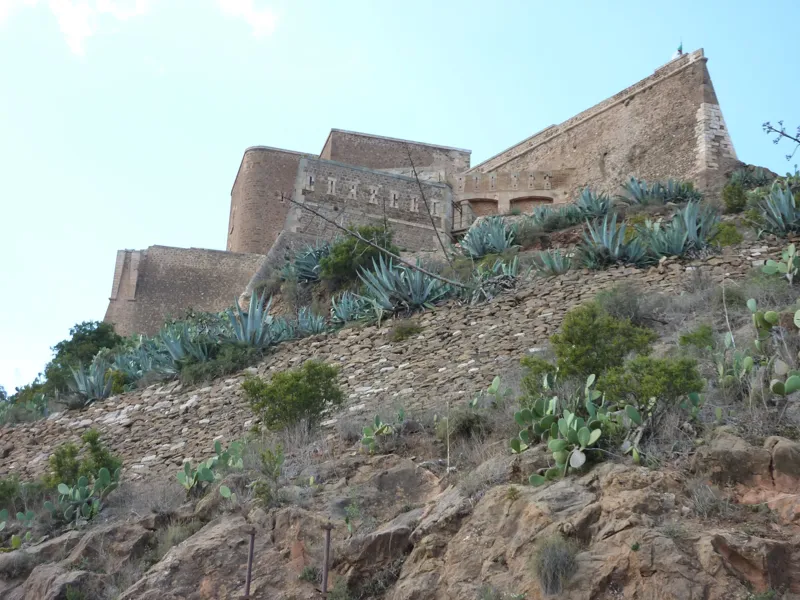
The bay gave shelter, and the small islands that gave the city its Arabic name — al-Jaza'ir, "the islands" — once stood just offshore. A Roman town, Icosium, lay along this coast; the medieval city was renewed under the Zirids, associated with Bologhine ibn Ziri; the Ottoman regency rebuilt the port, the fortifications and the great houses; the French conquest cut squares and straight roads into the lower town; and during the war of independence these lanes became both a refuge and a battlefield. None of those layers erased the one beneath it entirely. They are stacked, like the houses themselves.
That stacking is literal. The Casbah climbs a steep coastal slope above the bay, and its fabric is dense, stepped and terraced: one household's roof sits near another's threshold, lanes turn into stairways, and buildings lean on shared party walls rather than standing as separate objects. Houses turn inward, to a courtyard, and present mostly blank faces to the street. Rooms bridge the lanes overhead — the sabat — so that you walk through shade and then out into hard light. From the citadel at the top down to Place des Martyrs and the port, the whole settlement is one continuous section drawing of a hillside.
What looks like confusion from the outside is, in fact, a series of decisions: about gravity, water, shade, privacy, kinship and the cost of carrying goods uphill. Which raises the question the title of this piece is really about. Legible to whom?
Five ways to read the Casbah
These are not five sights. They are five questions to carry with you, whether you are walking the hill or reading about it from another continent.
Material: what is this wall actually made of? Much of the domestic fabric is masonry and brick bound with lime, timber floors and beams, rendered surfaces renewed with whitewash. The palaces speak a different dialect of the same craft: twisted marble columns, patterned ceramic tiles imported across the Mediterranean during the Ottoman centuries, carved plaster, cedar ceilings. Run your eye along a lane and ask which interventions let a wall breathe and which seal it. Lime is porous and forgiving; hard cement render traps moisture inside soft masonry and quietly accelerates decay. A house here is not a finished object. It is a surface that has to be renewed, and the material question — what may this wall be repaired with? — turns out to be a social question about money, skills and permission.
Topography: where does water go, and where does gravity take you? The slope is the Casbah's grammar. A main spine climbs; branches peel off it; stairs stitch levels together where a cart cannot pass. Cisterns, channels, public fountains and drains once organised the settlement as much as any street did, and water still decides much of what happens here, for better and worse. Navigation follows from this: down leads toward the sea and the port, up leads toward the citadel. You may not know the name of your lane, but your calves know which way the hill runs. Does that count as a map? For the body, yes.
Everyday use: who crosses this threshold, and when? The bent entrance, the sqifa, exists so that an open door does not open the house to the street. Beyond it lies the wast ed-dar, the central patio that lights and ventilates the rooms around it, and above, terraces where washing dries and neighbours speak across the gap — with an etiquette about who looks where. Outside, the derb, the short lane or cul-de-sac, works as a room without a roof: chairs at dusk, a ball game, a delivery, a wedding tray carried shoulder-high. The wider zenqa carries commerce; the houma, the neighbourhood, has its mosque, its oven, its hammam, its grocer. A dead end, in this system, is not an error in the plan. It is a shared space with a small, known public. Once you see that, the "maze" reading collapses.
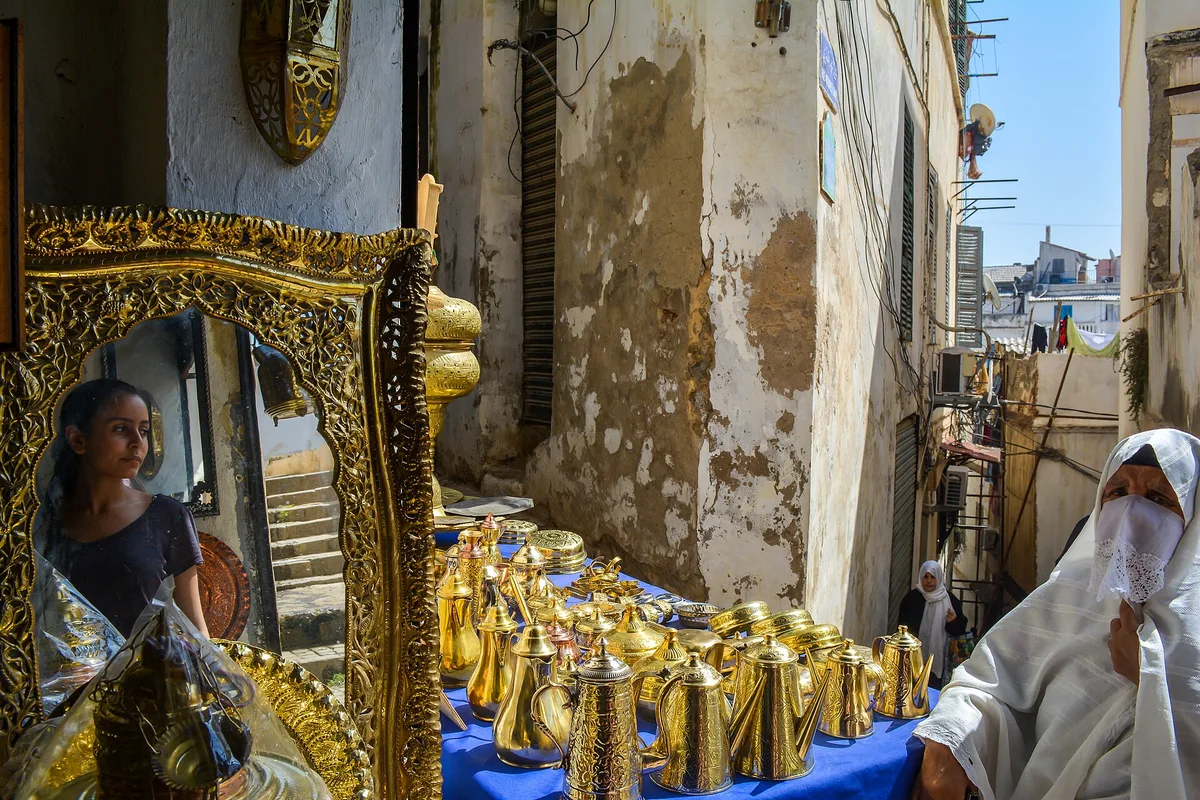
Craft and trade: who made this, and who can still make it? The coppersmith's hammer, the woodturner's lathe, the embroiderer working gold thread on the velvet of a karakou, the tailor, the maalem — the master builder who knows how timber, brick and lime behave together. Trade and maintenance are the same economy here: the workshop in a ground floor is also the reason somebody notices when the wall above it starts to move. And food is part of the same craft landscape — rechta for celebrations, mhajeb off a hot plate, karantika sold by the slice, bread going to and from the neighbourhood oven. So when a workshop closes, has a building merely lost a tenant, or has it lost its caretaker?
Collective memory: what do these lanes remember? The zaouia of Sidi Abderrahmane, the city's patron. Ketchaoua, built as a mosque, turned into a cathedral under colonial rule, returned to Muslim worship after independence. The Great Mosque, whose fabric predates the Ottomans; the Ottoman "New Mosque," new only in relation to its neighbours; palaces such as Dar Aziza, Dar Mustapha Pacha and Dar Khdaoudj el Amia; the Palais des Raïs group at the seaward edge. Chaâbi, the music shaped in these streets and carried outward by El Hadj M'hamed El Anka, and the older Andalusian traditions beside it. A hideout destroyed during the war of independence, now marked and mourned. Families who came from Kabylia, the Mzab, the south; a Jewish community whose presence is written into the fabric and whose absence is written into it too. Memory here is plural and sometimes contested. Who gets to narrate it, and in whose language?
What living heritage changes
If community is part of the monument, what follows when the community changes?
Heritage in a living quarter is not primarily a project; it is a habit. Roof terraces cleared before the rains. Drains unblocked. A beam replaced. A party wall negotiated with a neighbour whose family has shared it for three generations. Historically, much of the collective infrastructure — mosques, fountains, schools — was carried by habous endowments, property dedicated to upkeep in perpetuity. When such mechanisms weaken, maintenance falls back on household budgets, and household budgets are not conservation budgets.
This is where the honest questions live. What happens when an owner lives elsewhere and a tenant has no security of tenure? When a family, offered an apartment with reliable plumbing, takes it — as who would not? When heritage rules make a lawful, well-executed repair unaffordable, so that a household does the cheap thing quietly instead? Is an unauthorised intervention vandalism, or is it a family doing what families here have always done, with the wrong materials and no support?
Notice that the usual debate — freeze it as a museum, or let it modernise and lose its soul — offers two futures that both remove the residents from the centre of the story. A better question: what would make it possible for the people who already maintain this city to keep maintaining it, in decent conditions, and to stay? Daylight, wiring, damp control, sanitation and structural safety are not enemies of authenticity. They are the conditions under which authenticity has somewhere to live.
Conservation without spectacle
The documented pressures on the site are set out plainly in the World Heritage record: uncontrolled interventions, earthquakes, fire, landslides and floods. They deserve to be understood mechanically rather than dramatically.
This coast is seismic, and dense masonry with shared walls responds badly to shaking. Timber floors and closely packed dwellings allow fire to travel, while stepped lanes and covered passages complicate access for equipment. A steep slope saturated by storm runoff, blocked drains or leaking supply pipes is a slope that can move; instability and flooding are related problems, not separate ones. Uncontrolled interventions — unpermitted demolition, added storeys, incompatible materials, structural alterations without engineering — add load and remove the small redundancies that kept old buildings standing.
The World Heritage Committee has returned to the state of conservation of the Casbah more than once, and Algeria has a permanent safeguarding framework for the protected sector, alongside the slow, unglamorous work of survey, shoring, drainage, legal clarification of ownership, and training. Much of the best work here is invisible in photographs: a propped wall, a rebuilt channel, a documented roof.
So resist the headline that says the Casbah is "disappearing." It flattens a specific, addressable set of failures into a mood, and a mood cannot be repaired. Ask instead: which failure, at which address, is being fixed this year, by whom, with what skill and what money — and who will live in the building afterwards?
Looking responsibly
Before you raise a camera, ask the simplest question available: who does this image serve?
A protocol follows from the answer, and it is not complicated.
Ask before photographing people. Ask in words, wait for a real yes, and treat silence or a turned shoulder as no. No intrusive portraits: no long-lens "candids," no faces filling the frame without explicit consent, no children.
Do not photograph worship. Not prayer, not ablution, not a funeral, not the inside of a mosque during use. A religious building is not a set.
Do not photograph domestic interiors. Not through an open door into a sqifa or patio, not from a terrace into a neighbour's, not from a rooftop you were not invited onto. The threshold you find picturesque is someone's privacy.
Credit local guides and makers by name, and pay them properly. If a guide made your visit possible, they belong in the caption and the byline conversation, not in the acknowledgements you never write. Buy from the workshop rather than haggling it into the ground.
Keep the lane clear. You are standing in a thoroughfare, a doorstep and a playground. No drones. No staging "authenticity," and no asking residents to perform their history — including its painful chapters — for a visitor's benefit.
Go with someone who knows the hill, in daylight, modestly dressed, and accept a refusal without arguing. Refusal is information about the place, not an obstacle to it.
And if you are reading from far away, the same discipline applies to your attention. Look at who is quoted and who is named. Prefer Algerian writers, photographers and researchers. Be sceptical of captions that call this quarter "timeless," "forgotten" or "frozen" — words that quietly require its residents to stop having a present. Would you accept that description of your own street?
FAQ
What is the Casbah of Algiers? It is the historic medina of Algiers, climbing the steep coastal slope above the bay. UNESCO describes it as a unique kind of medina, combining the remnants of the citadel, old mosques and Ottoman-style palaces with a traditional urban structure strongly associated with a deep-rooted sense of community. The word casbah originally refers to the fortified citadel; the name came to cover the whole old city below it.
Is the Casbah a UNESCO site? Yes. It was inscribed on the World Heritage List in 1992, as the Kasbah of Algiers. The recognition covers the ensemble — fortification, religious buildings, palaces, houses and streets — together with the living urban and social fabric that gives it meaning.
Do people still live in the Casbah? Yes. It is a residential quarter where people live, work, trade and worship today. Households, workshops, shops, ovens, hammams and mosques share the same lanes. It is not an open-air museum, which is precisely why questions of housing, maintenance and residents' rights are central to its conservation rather than peripheral to it.
Can you visit the Casbah? Yes — you are entering a neighbourhood, not a gated attraction, so there is no single ticket or perimeter. Certain palaces and cultural venues open to the public, with hours that change; check locally rather than assuming. Go in daylight with a guide who knows the quarter, ask before photographing anyone, and do not photograph worship or domestic interiors.
Why is the Casbah not a labyrinth? Because "labyrinth" describes an observer's ignorance, not the plan. The network follows the slope: a climbing spine, branching lanes, stairs between levels, and cul-de-sacs that function as shared space for the households around them. Residents read it through gradient, thresholds, names, sounds and habit — down to the sea, up to the citadel. It is legible to the people who live there, which is the only legibility a city needs.
Sources
- UNESCO World Heritage Centre — Kasbah of Algiers (inscribed 1992): https://whc.unesco.org/en/list/565/
Produced with Qwen4-Max-Preview (deep-thinking mode) from the Algeria Splendors Article Foundry blueprint; edited and fact-checked by Muse, 13 November 2026. Algeria Splendors is an independent cultural publication from Algeria.