ALGERIA SPLENDORS
Last checked: 14 November 2026. Ground rules in the Algerian South change with security assessments and season. Confirm your exact route, in writing, with your agency and the relevant authorities before you travel.
Answer first
There are three regimes, and most trips mix them:
- Free circulation — the North and the main roads: with a consulate visa, you travel as you would anywhere, in your own vehicle or by bus and taxi.
- Agency-guided — the organised South: tours to Djanet, the Tassili n'Ajjer, Timimoun and Tamanrasset booked through approved Algerian agencies, whose file also carries your arrival regularisation (see our visa guide). A local guide is part of the structure, not an optional extra.
- Escorted — specific desert sectors and border approaches, where the gendarmerie imposes an escort vehicle, typically in relays. And at least one famous road — Djanet to Tamanrasset direct — is reported closed to foreign travellers by the gendarmerie at Djanet: you route around it, or you fly.
What follows separates what specialist sources state from what travellers report. Where the two disagree, we say so.
At the border: the vehicle paperwork
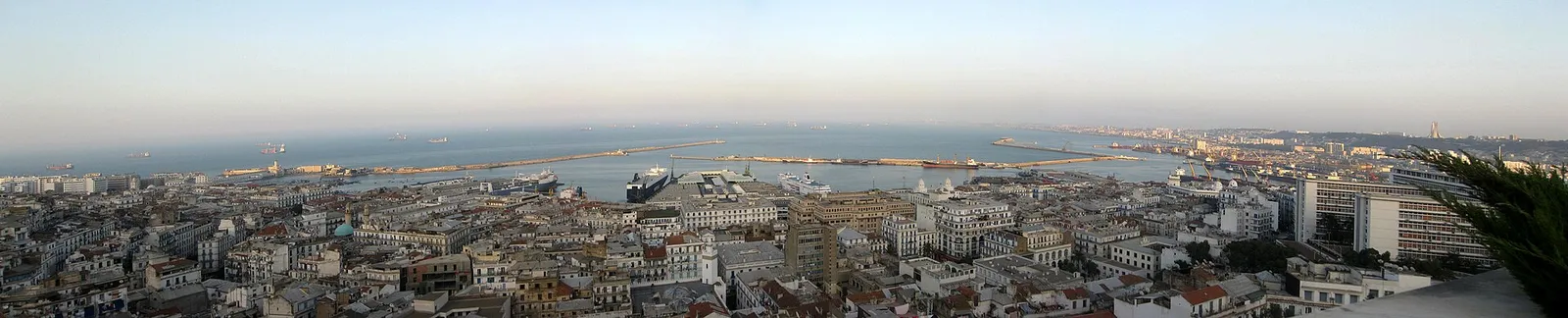
If you bring your own vehicle (the classic entry is the ferry to Algiers, or the Tunisian land border), expect the TDP — titre de passage en douane, the temporary admission document for the vehicle. Travellers on the long-running Horizons Unlimited (HUBB) "Algerian Sahara" thread report around three hours of processing at the port of Algiers on a busy arrival. Budget the time, keep every stamped copy, and do not plan a desert departure the same day.
Borders, as of the November 2026 update of Sahara Overland — the reference site for trans-Saharan overlanding: the land borders realistically usable by foreign overlanders are Tunisia and Mauritania. The borders with Libya, Niger and Mali are not open tourist routes, and Morocco's has been closed for decades. Treat any itinerary drawn through them as fiction.
Where the escort applies — and what it looks like
Reports from HUBB's Algeria threads (the main thread runs to 27 pages; a dedicated "travelling without a guide in your own vehicle" thread drew 124 replies in September 2026) describe a consistent pattern for the deep South:
- Escorts work in relays. On sectors where an escort is organised, travellers describe gendarmerie escorts organised in relays, with handovers between teams along the route (traveller reports, November 2026). The sectors concerned and the frequency of relays vary, and no official list of sectors is published: the exact arrangement for your route is confirmed in writing before departure. It is slow, it is procedural, and it is not negotiable at the checkpoint.
- Escort costs land on the traveller. On organised tours they are inside the agency price; on privately arranged travel, the price must come from a dated written quote for your route. Get the figure, and what it covers, in writing before departure. This journal does not publish a general daily rate.
- The Djanet–Tamanrasset road. The gendarmerie at Djanet is reported to prohibit this direct route to foreigners. Travellers route via the north or fly the leg. If an itinerary sells you the direct road, ask exactly who authorised it.
To be verified, and we flag it as such: the precise list of sectors under escort obligation is not published as a single official document in English. It is applied locally, and travellers' reports differ in detail by month and by entry point. The rule that survives every report: your agency confirms the regime for your exact route, in writing, before you pay.
The guided South: what the agency actually does
For the Tassili, the Assekrem, the oases of the Touat — the trips most readers of this journal are planning — the structure is the agency model described in our visa guide:
- The agency lodges your file in advance; your visa is regularised on arrival (24 southern wilayas, up to 30 days).
- The agency provides the local guide, the vehicles, the cook, the permits chain — and absorbs the escort question into its own logistics.
- Your freedom inside that frame is real but bounded: camps, side valleys and photo stops are negotiable with your guide; the route's skeleton is not.
Independent drivers with their own vehicles sit between the regimes: visa from a consulate, TDP at entry, free circulation on the northern network — then guides and escorts joining for the southern sectors, arranged in advance through an agency or contacts on the ground. The September 2026 HUBB thread shows it is done regularly; it also shows nobody experienced calls it simple.
Before you pay anyone: the written checklist
- The regime, sector by sector, for your exact route — free, guided, escorted — and who decided it.
- The Djanet–Tamanrasset question, if your map crosses it: authorised by whom, in writing?
- Escort and guide costs per day, what they include (vehicle, fuel, crew food), and who pays if a relay fails and you wait a day.
- The visa mechanism matched to the route: consulate visa for the North, agency regularisation for the South — and if you combine both, which document covers Algiers (our visa guide explains why this is the most common planning mistake).
- A named contact who answers during the trip, not only before it.
FAQ
Can I drive the Algerian Sahara completely alone? In the deep South, in practice no — organised sectors, guide requirements and escort relays structure the trip whether you book a tour or drive your own vehicle. The North's road network is free circulation with a consulate visa.
Is the escort a safety problem or a formality? Travellers consistently describe it as procedure, not incident: relays, paperwork, waiting. It exists because the state manages risk in remote border regions; the traveller's cost is time and money, and both should be in the written quote.
How much should I budget for guides and escorts? Do not budget from a general daily rate published here: there is none. Organised tours fold this cost into the package price; for a private arrangement, require a dated written quote stating the daily figure, what it includes, and who pays for waiting days — then budget from that document.
Which borders can I actually use with my own vehicle? As of November 2026, Tunisia and Mauritania are the realistic land entries for foreign overlanders, per Sahara Overland's current update. The ferry to Algiers (from Marseille, Alicante or other Mediterranean ports) is the other classic entry, with the TDP issued at the port.
Does my South tour authorisation let me finish with a few days in Algiers? No — arrival regularisation covers the Great South only. The North needs the consulate visa. See the visa guide.
Sources
- Horizons Unlimited (HUBB), "Algerian Sahara" thread (27 pages, reports to April 2026) and "Travelling Algeria without a guide in your own vehicle" thread (124 replies, September 2026) — traveller reports, read 14 November 2026.
- Sahara Overland (Chris Scott), Algeria guidance, updated November 2026 — borders and escort practice.
- Algeria Splendors, Algeria Visa Guide — the two visa routes and the South regularisation, checked 14 November 2026.
This page is a map of what is known, drawn from specialist and traveller sources — not an official text. The official word for your route is the one your agency obtains for you, in writing.