ALGERIA SPLENDORS
Access and permit facts follow the framework set out in our escort guide and our Tassili guide, from park requirements and current operator practice, checked November 2026. Flight schedules and agency offerings change; everything time-sensitive here is flagged for written confirmation — that is not caution theatre, it is how the far South works.
The town that the plateau made necessary
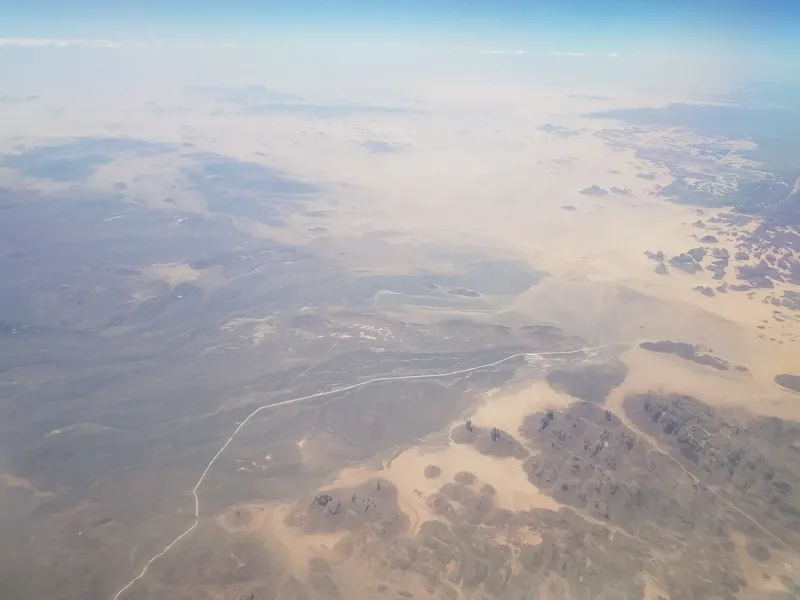
Djanet sits where the Tassili's stone country falls toward the sand seas of Algeria's far south-east, an oasis of palm groves in the oued that shares its climate: dry almost always, briefly alive when the rains come over the plateau. For centuries it was a caravan place on the routes between the Fezzan, the Niger bend and the Algerian north. Today its economy has a second pillar, and you are it: Djanet is the service town of the Tassili n'Ajjer National Park.
The park's administration is directed from here. The licensed local agencies that organise plateau treks are based here. The guides, the drivers, the donkey teams' owners, the cooks — here. Which means Djanet is not a place you pass through on the way to the experience. It is where the experience is negotiated, permitted, provisioned and, a week later, where it ends with a shower and a dinner that tastes like a festival.
How the gateway works: the permit chain
Nothing about a Tassili trek is improvised, and Djanet is where the un-improvisation happens. The chain, in order:
1. The agency. You contract a licensed local agency — in Djanet or working through one — for the whole expedition: itinerary, guide, team, transport, food, park formalities. For foreign visitors this sits inside the visa process itself, since the southern itinerary is normally part of the file your visa is built on; our visa guide explains the arrival-regularisation route that many Sahara travellers use, and its limits.
2. The park permit. The agency files for the Tassili park authorisations for your party and route. Lead time is real — build it into your dates, and treat any promise of instant paperwork as a question, not a comfort.
3. The framework on the ground. Depending on the sector and the season, official escort requirements can apply to movements in the far South — the honest map lays out what is rule, what is report, and what to get confirmed. Your agency coordinates it; your job is to make sure the confirmations are written.
4. The departure. Treks leave Djanet by 4×4 to the plateau's access points, then continue on foot with animal support, as the Tassili guide describes. The town bookends the walking: outfitting on day one, return on the last.
The five questions to get answered in writing — before any deposit: exactly which sites does the itinerary include (Sefar? Jabbaren? Tamrit?); how many walking days, and what is the longest; what happens, contractually, if a permit or escort condition changes the route; what is included in the price, itemised (park fees, team, food, camping gear, airport transfers); and what the cancellation terms are. An agency that answers these cleanly is telling you how it will behave on the plateau.
Getting to Djanet
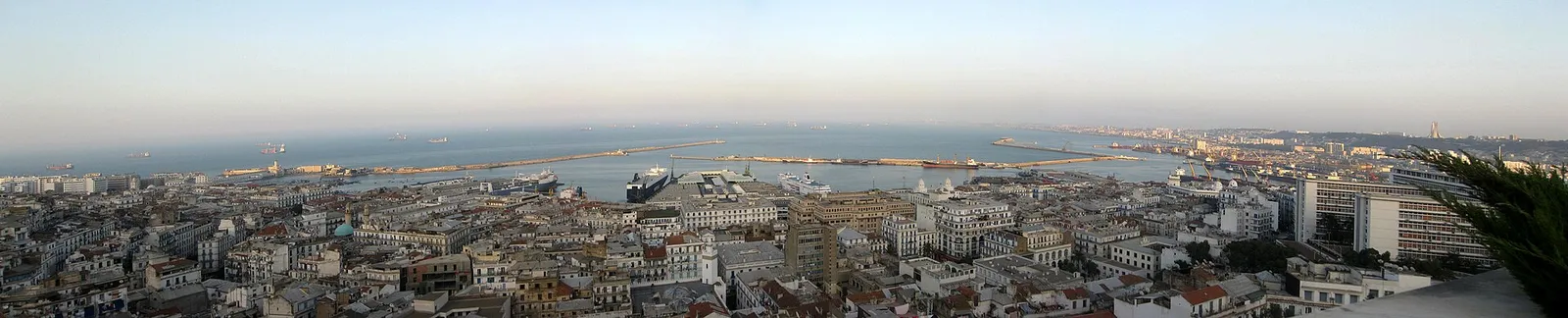
Djanet has an airport with domestic services from Algiers — the practical arrival for almost every foreign trekker, on schedules that change often enough that this guide refuses to print them: verify against your trek dates and let the agency confirm the current pattern. The overland alternative is a journey of days through the framework described in the escort guide; travellers do it, as a deliberate expedition of its own, not as a shortcut. Either way, build a buffer day in Djanet before the trek: flights move, paperwork breathes, and — as the next section argues — the buffer day is not lost time.
What to do with the gateway days
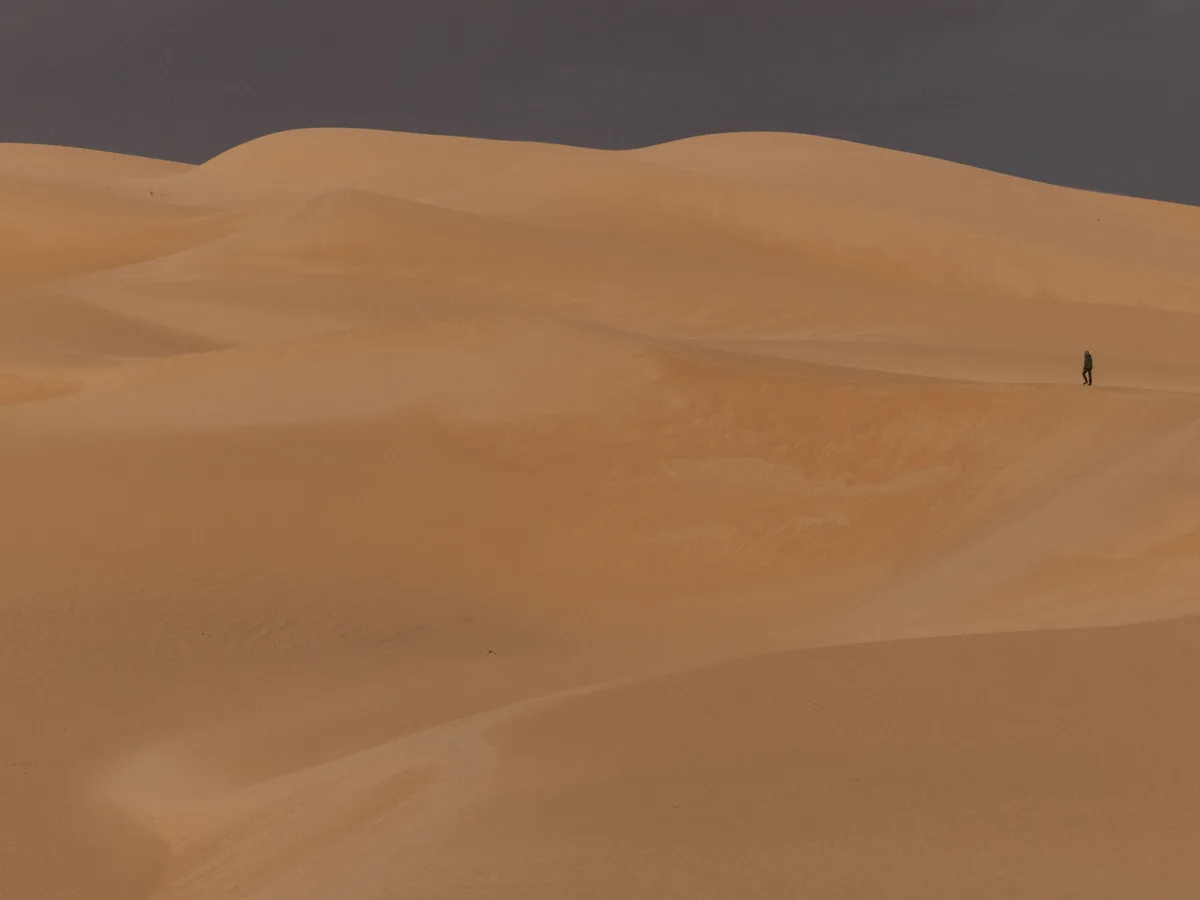
Erg Admer. At the town's edge begins a sea of dunes — the classic first evening of a Djanet stay, when the sand takes the sunset and the plateau stands dark behind you. Operators run it as a short excursion; as an introduction to the scale of where you have arrived, nothing in town competes.
Essendilène. The beloved day trip: a canyon north of Djanet where a guelta — a rock pool, permanent water in the stone — waits at the end of a walk among sculpted cliffs and, after wet years, oleanders in flower. It is the Tassili in miniature: stone, water, shade, and the first rock art of the journey for many itineraries.
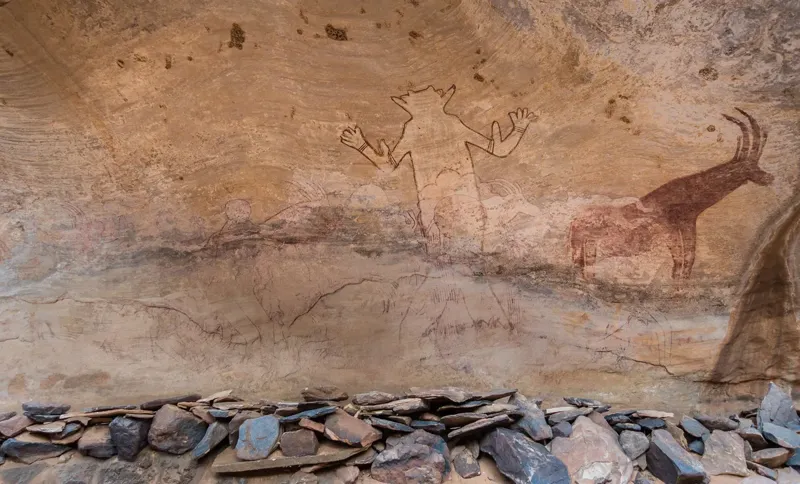
The Crying Cow of Tegharghart. Near Djanet stands the engraving that has become Algerian rock art's emblem: a cow, finely carved, with what appears to be a tear running from its eye. It dates from the pastoral age, when cattle herders worked a greener Sahara. Small, roadside, unmissable — and the right first encounter before the plateau's fifteen thousand.
The town itself. The palm grove, the old quarters, the market: Djanet repays a slow morning, and the days before a trek have practical rituals too — the agency's final briefing, the buying of what the plateau list forgot, the early night. Travellers who rush this town arrive at the plateau's climb already behind. Travellers who give it a day start rested, provisioned, and oriented — in every sense.
When, and for how long
The trekking season rules everything: the cooler months, roughly October to April, with mid-November — as this guide is published — in the heart of it. Around the trek itself, count one buffer day before and one after, in Djanet. The town is not the price of the Tassili. It is part of its design: the gate, the market, the last bed and the first one — and, if you let it be, the first chapter.
Frequently asked questions
Do I have to go through Djanet for the Tassili? In practice, yes: the park administration, licensed agencies and trek departures are based there, and permits are assembled there. It is the gateway in the literal sense.
Can I organise the trek once I arrive in Djanet? Agencies exist in town and travellers do arrange on the spot in season — but the permit lead time, and for foreigners the visa framework built around a pre-arranged itinerary, make advance organisation the reliable path. If you plan to arrange locally, arrive with days to spare, not a fixed departure.
How do I get to Djanet from Algiers? By domestic flight to Djanet's airport, on schedules that change — verify for your dates. Overland is a multi-day expedition under the South's guided/escorted framework, not a transfer.
What is there to do in Djanet itself? The Erg Admer dunes at sunset, the Essendilène canyon and its pool as a day trip, the Crying Cow engraving at Tegharghart, and the palm grove and market of the town. One full day is well spent; two are not wasted.
When should I go? In the trekking season, roughly October to April — and with a buffer day in Djanet on each side of the plateau trek.
Algeria Splendors writes from Algeria. Companion reading: Tassili n'Ajjer: One of the World's Most Important Groupings of Prehistoric Rock Art · Free, Guided or Escorted? The Honest Map for Travelling Algeria's Sahara